
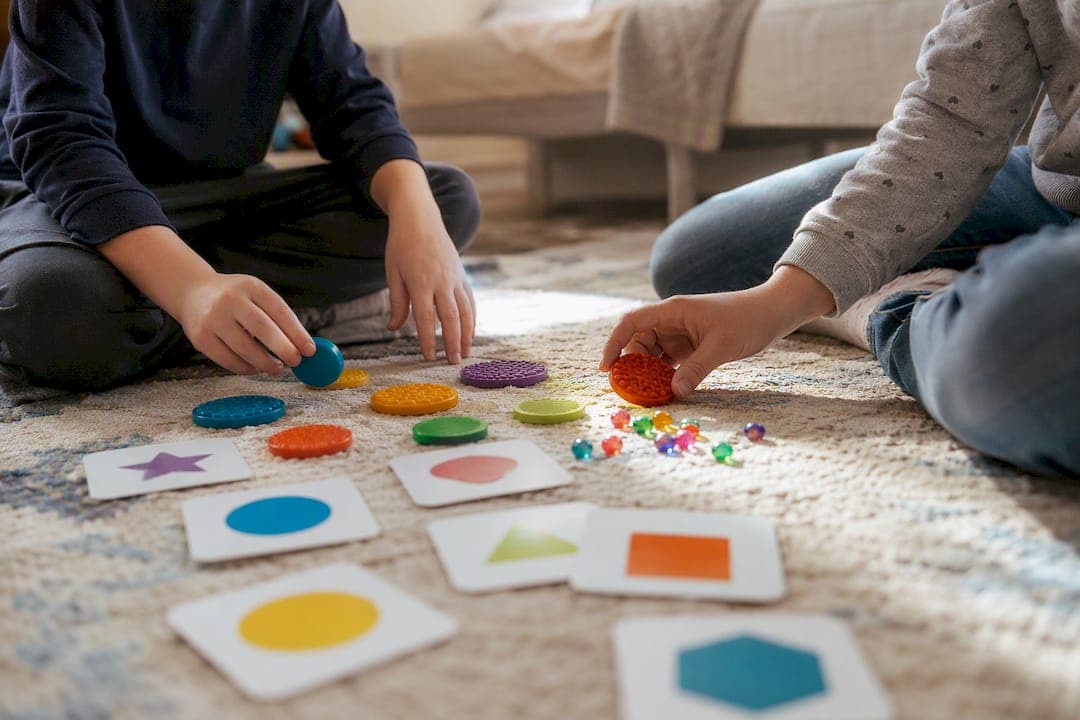
Twice-exceptional autism (often called 2e autism or "2e autistic") describes a person who has both autism spectrum disorder and markedly high cognitive ability in one or more areas. The immediate next step, if you suspect it in a child or in yourself, is to start collecting concrete evidence — uneven test scores, signs of masking, sensory overload after school — and request an evaluation from a professional experienced with both giftedness and autism.
TL;DR:
- Many 2e autism cases involve significant subtest scatter, especially between processing speed and verbal comprehension, predicting anxiety and attentional issues.
- Standardized tests often fail to identify 2e autism because high verbal scores can mask processing gaps, which may cause under-referral for further evaluation.
- Recognizing traits like intense interests, social inconsistencies, and sensory sensitivities alongside uneven cognition is essential for early identification.
- Thorough assessment requires multiple specialists, including neuropsychologists, to interpret subtest scatter, autism measures, and adaptive behavior correctly.
- Early documentation of inconsistent behaviors and specific difficulties aids families in advocating for appropriate testing and tailored educational supports.
Table of Contents
- What Twice-Exceptional Autism Actually Means
- Signs and Cognitive Patterns That Show Up in Gifted Autistic Kids
- Why 2e Autism Gets Missed or Misdiagnosed So Often
- Getting a Proper Evaluation: Who to See and What to Bring
- Getting the Right School Supports in Place
- Interventions Beyond the Classroom That Actually Help
- Home Routines That Reduce Overload and Build Independence
- What Happens When Twice-Exceptional Autism Isn't Caught Until Adulthood
- Your Next Steps: A Practical Checklist and Where to Turn
- How Omniprism Helps You Prepare for That Conversation
- A Few Honest Words on Getting This Right
- Start With a Free Self-Assessment Before You Book an Evaluation
- Sources
What Twice-Exceptional Autism Actually Means
Twice-exceptional autism refers to someone who meets criteria for autism spectrum disorder while also showing gifted-range ability, whether that's a sky-high vocabulary, advanced math reasoning, or a memory for facts that outpaces every kid in the room. Neither trait cancels the other out. A child can read at a twelfth-grade level in third grade and still melt down over a fire drill, and both facts belong on the same intake form.
Researchers and educators generally define 2e when a documented cognitive strength (often an IQ score, achievement test, or domain-specific talent) co-occurs with a formal ASD diagnosis or clear diagnostic indicators. That sounds tidy in a sentence. It gets messier in practice, because "gifted" itself has no single agreed-upon cutoff across states, school districts, or countries, and autism presents on a spectrum wide enough to include a nonspeaking toddler and a talkative, socially awkward professor.
A systematic review of research on gifted individuals with autism spectrum disorder found that only a limited proportion of the studies it screened presented empirical data, the rest being commentary, case reports, or theoretical pieces. That's a thin evidence base for a population that isn't rare. It means most of what clinicians know about 2e autism comes from small samples and clinical observation rather than large controlled trials, and prevalence figures you see quoted online should be read with real skepticism.
Why does this matter for a parent sitting across from a school evaluator? Because the shortage of standardized research translates into inconsistent screening practices from one district to the next. A national picture of autism prevalence, tracked by the CDC's surveillance data, tells you how common autism is broadly, but it says nothing about how many of those children also test in the gifted range, because most surveillance systems don't cross-tabulate the two.
What this uncertainty means in practice:
- No single test or score confirms 2e status; it requires a convergence of evidence across cognitive, academic, and behavioral domains.
- Definitions of "gifted" vary by state and district, so a child identified as 2e in one school system might not qualify in another.
- Research gaps mean families often have to advocate harder, because many evaluators have never been trained to look for this overlap.
Signs and Cognitive Patterns That Show Up in Gifted Autistic Kids
The clinical picture of a gifted autistic child rarely looks like a stereotype of either giftedness or autism alone. It looks like both, tangled together in ways that confuse teachers who expect one profile or the other.

Common observable traits include intense, narrow special interests pursued with a depth that goes well beyond a typical hobby, alongside social interactions that swing between precociously articulate and painfully awkward. A child might lecture an adult on dinosaur taxonomy with total fluency, then completely misread a classmate's sarcasm. Sensory sensitivities (to fluorescent lights, scratchy fabric, cafeteria noise) often coexist with an ability to hyperfocus so completely that a fire alarm barely registers.
Cognitive testing tends to reveal what psychologists call subtest scatter: wide gaps between different cognitive subtests on the same battery, rather than the smooth, even profile that composite IQ scores assume. One gap shows up often enough that it has its own research base: a divergence between processing speed and verbal comprehension, sometimes shortened to PS/VC discrepancy.
Key statistic: A study on the PS/VC gap in gifted youth found this discrepancy is both genetically and diagnostically linked to autism, and that a wider gap predicts higher rates of internalizing symptoms (anxiety, withdrawal) and attention difficulties. That's not a minor footnote. It means a kid who can debate philosophy but takes twice as long as peers to copy notes off a whiteboard isn't being lazy or defiant; the underlying processing gap is doing real work, and the anxiety that follows is often a downstream effect rather than a separate problem.
That gap plays out in daily life in ways that look contradictory to anyone unfamiliar with the pattern:
- A student answers a complex verbal question instantly but takes several minutes to finish a timed worksheet full of simple problems.
- Written output lags far behind spoken ideas, so essays look "behind grade level" even though the child speaks like an adult.
- Multi-step directions overwhelm a student who can independently research and explain college-level topics.
- Fatigue builds across the school day because verbal processing is running at full speed while motor and processing speed tasks drain far more energy than they should.
These patterns aren't oddities. They're the expected fingerprint of a brain running two very different systems at two very different speeds, and recognizing that fingerprint early changes how a family approaches assessment.
Why 2e Autism Gets Missed or Misdiagnosed So Often
The single biggest reason twice-exceptional kids fall through the cracks is masking, and it runs in both directions at once. Giftedness gives a child the tools to compensate: rehearsing scripts for social situations, memorizing what "normal" reactions look like, or using superior verbal skills to talk their way out of moments that would otherwise reveal a meltdown in progress. Autism-related traits, meanwhile, can suppress the outward signs of giftedness, since a child fixated on rigid routines or overwhelmed by sensory input rarely gets the chance to show off advanced reasoning in a noisy classroom.
That double masking means a child can look "just anxious" or "just quirky" to a teacher, and "clearly bright, so probably fine" to a pediatrician doing a fifteen-minute checkup. Neither professional is wrong about what they see. Both are missing half the picture.
Systemic bias compounds the problem. Many school evaluations still lean heavily on a single composite IQ score, which averages out the very subtest scatter that signals something's off. A child with a genius-level verbal score and a below-average processing speed score might land in the "average" range on paper, and average scores rarely trigger a referral for further testing. Clinical observations of the overlap between high intellectual potential and autism note that features like pedantic speech patterns, narrow special interests, and social isolation can look almost identical in gifted and autistic children, and evaluators without training in both areas frequently attribute the whole picture to one label and stop looking.
Watch for these signals that warrant a closer look:
- A composite IQ score that looks unremarkable despite obvious verbal or academic precocity.
- Big score gaps between subtests on any cognitive testing already completed.
- A child who performs well one-on-one but falls apart in group or unstructured settings.
- Reports of exhaustion, headaches, or shutdowns after a school day that "went fine" according to teachers.
Pro Tip: If a school psychologist hands you only a composite IQ score, ask specifically for the subtest-level breakdown. A single averaged number can hide the exact discrepancy that explains your child's struggles.
Getting a Proper Evaluation: Who to See and What to Bring
A thorough 2e evaluation almost always requires more than one professional, and it helps to know which specialist covers which piece of the puzzle before you start scheduling appointments.
A neuropsychologist typically runs the most complete cognitive battery and is best positioned to interpret subtest scatter, including a PS/VC gap, in context. A developmental pediatrician can rule out or confirm medical and developmental factors and often coordinates referrals. A school psychologist handles the educational side, determining eligibility for an IEP or 504 plan, though school-based evaluations sometimes have narrower scope than a private neuropsychological workup, particularly around giftedness identification.
What a solid evaluation should include:
- A full cognitive battery (such as the WISC-V) reported at the subtest level, not just a composite score.
- Autism-specific measures, like the ADOS-2 or clinician-administered developmental history, interpreted by someone trained to recognize autism in high-verbal, high-masking presentations.
- Executive function assessment, since planning, working memory, and task initiation issues are common and easy to mistake for lack of motivation.
- Adaptive behavior scales that compare real-world functioning to cognitive potential, since a big gap between the two is itself diagnostically meaningful.
- Academic achievement testing to document where classroom performance diverges from cognitive ability.
Before any appointment, spend an evening pulling together documentation. Evaluators work faster and more accurately when they aren't starting from zero.
- Report cards and teacher comments going back several years, especially any that mention inconsistency.
- Writing samples alongside recordings or notes of verbal conversations, to show the gap between spoken and written output.
- A log of sensory reactions, meltdowns, or shutdowns, with the environment noted (lighting, noise, transitions).
- Any prior testing results, even partial or outdated ones.
- A one-page summary of specific concerns, written in plain language, so the evaluator isn't parsing your worry from a rambling narrative.
Omniprism's guided assessment for ages 11 to 13 can help organize exactly this kind of evidence before a formal evaluation, giving families a structured starting point rather than a blank page.
Getting the Right School Supports in Place
An IEP or 504 plan built for a twice-exceptional student has to do two things at once: protect against the disability's impact and keep the academic bar high enough to prevent boredom and disengagement. Get either one wrong and the plan backfires, either leaving the child unsupported or dumbing down material a gifted mind actually craves.
Fairfax County Public Schools' guidance on supporting 2e students with autism identifies social interaction difficulties, executive function gaps, rigidity around change, and elevated anxiety as the recurring challenge areas schools need to address, and it recommends individualized supports rather than a one-size template. That same guidance points to school counselors or outside agencies when a student's needs go beyond what a classroom teacher can reasonably manage alone.
Accommodations that tend to work well for this profile include:
- Extended time on written work to offset a processing speed gap, without lowering expectations for content quality.
- Sensory accommodations, like noise-canceling headphones, a quiet space for breaks, or flexible seating away from high-traffic areas.
- Explicit executive function supports: checklists, broken-down multi-step directions, and visual schedules posted where the student can reference them independently.
- Subject acceleration or enrichment in areas of strength, paired with support (not remediation) in areas of struggle, so the child isn't held back academically to accommodate unrelated challenges.
- Structured social skills instruction that treats social communication as a teachable skill rather than a character flaw.
Walking into an IEP or 504 meeting prepared changes the outcome. Bring the documentation described above, and come with specific, concrete requests rather than a vague ask for "more help." Instead of "he needs support with writing," try "he needs access to speech-to-text software and extended time on any assignment over one paragraph." Specificity gives the team something they can actually write into the plan and measure later.
Interventions Beyond the Classroom That Actually Help
School accommodations handle the academic environment, but daily functioning often needs support that a classroom simply can't provide.
Occupational therapy remains one of the most useful interventions for sensory regulation, helping a child build tolerance for triggering environments or develop concrete coping strategies for sensory overload before it turns into a shutdown. Executive function coaching, whether delivered by a therapist, tutor, or trained coach, targets the planning, organization, and task initiation struggles that composite IQ scores never capture. Cognitive behavioral therapy tends to work well for the anxiety that so often rides alongside a PS/VC gap, though it works best when the therapist adapts the approach for autistic thinking patterns rather than applying a standard script built for neurotypical clients.
Social skills work deserves a specific caveat: the strongest approaches build on a child's existing strengths and interests rather than trying to force generic small talk. A kid obsessed with astronomy will engage far more with a social skills group built around a shared interest club than with a worksheet on "appropriate conversation topics."
- Occupational therapy for sensory processing and regulation strategies.
- Executive function coaching for planning, organization, and follow-through.
- CBT adapted for autistic cognitive styles, targeting anxiety and rigid thinking.
- Strengths-based social skills groups organized around genuine shared interests.
Medication sometimes enters the conversation, usually for co-occurring anxiety, ADHD, or sleep disruption rather than for autism or giftedness themselves, since neither is a condition medication treats directly. That's a conversation to have directly with a prescribing physician or psychiatrist, weighing specific symptoms against specific options, not a decision to make from an internet search.
Pro Tip: Ask any new therapist how they'll fold your child's special interest into sessions. If they can't answer, they probably haven't worked with a 2e profile before.
Home Routines That Reduce Overload and Build Independence
Home is where a lot of the daily regulation work actually happens, and small structural changes tend to outperform big dramatic interventions.
- Post a visual schedule where your child can see it independently, and keep transitions predictable by giving a heads-up several minutes before any change in activity.
- Build in sensory-friendly adjustments at home the same way a school would: a quiet corner, noise-reducing headphones on hand, and lighting that doesn't trigger discomfort.
- Break multi-step tasks (like getting ready for school) into a written or picture checklist, since executive function support at home reinforces what's happening in the classroom.
- Use special interests as a bridge rather than a distraction to manage. A child obsessed with trains can practice math through train schedules, or work on writing skills through a "field guide" to their favorite subject.
- Coach self-advocacy language appropriate to your child's age, starting with something as simple as "I need a break" for a younger child and building toward "I process information differently and need extra time" by the teen years.
None of this requires special equipment or an expert consultation. It requires consistency, and a willingness to treat the special interest as an asset rather than something to ration as a reward.
What Happens When Twice-Exceptional Autism Isn't Caught Until Adulthood
A substantial number of twice-exceptional autistic people don't get identified until adulthood, often after years of being told they were "just anxious," "just a perfectionist," or "clearly too smart to have a real problem." The compensatory strategies that got them through childhood (memorizing social scripts, over-preparing for every interaction, leaning hard on intellectual strengths to paper over struggles) tend to become unsustainable under the compounding demands of a job, a relationship, or independent living.
Burnout is the most common downstream consequence, and it often looks less like a dramatic breakdown and more like a slow erosion: chronic exhaustion, shrinking tolerance for sensory input that used to be manageable, and a creeping sense that keeping up the mask isn't worth what it costs anymore. Late diagnosis frequently coincides with a major life transition, since college, a new job, or a first apartment removes the external structure that had been quietly compensating for unaddressed struggles.
Practical steps for adults navigating this include:
- Requesting workplace accommodations under applicable disability protections, such as flexible scheduling, written instructions instead of verbal ones, or a reduction in open-office sensory load.
- Seeking vocational support services that specialize in neurodivergent adults rather than generic career coaching.
- Connecting with adult autism peer groups, which often surface strategies that clinical literature hasn't caught up to yet.
- Pursuing a formal diagnosis through a psychologist or psychiatrist experienced with adult autism presentations, since many standard screening tools were normed on children and can miss adults who've spent decades masking.
Your Next Steps: A Practical Checklist and Where to Turn
Start with documentation, not appointments. Evidence makes every conversation that follows faster and more productive.
- Document: Collect report cards, writing samples, sensory logs, and any prior testing.
- Request: Ask your pediatrician or school in writing for a comprehensive evaluation, using specific language like "I'm requesting an evaluation that includes subtest-level cognitive testing and autism-specific measures, given signs of both giftedness and autism."
- Meet: Bring documentation and concrete accommodation requests to any school meeting; don't leave with vague promises.
- Follow up: Revisit the plan every semester, since a 2e profile often shifts as academic demands change.
| Step | What it involves | Who's involved |
|---|---|---|
| Document | Gather records, writing samples, sensory notes | Parent or adult self-advocate |
| Request | Formal written request for a 2e-aware evaluation | Pediatrician, school psychologist, neuropsychologist |
| Meet | IEP/504 meeting with specific accommodation asks | School team, parent, sometimes an advocate |
| Follow up | Review and adjust the plan each semester | Parent, teachers, therapists |
For trusted background reading, the Child Mind Institute's overview of twice-exceptional kids is a solid, plain-language starting point for parents who are new to the term.
How Omniprism Helps You Prepare for That Conversation
Before you ever sit down with a neuropsychologist, it helps to walk in with language for what you've been noticing. Omniprism's self-assessment tool covers 14 domains, including autism, ADHD, dyslexia, masking, sensory processing, and dyspraxia, and returns an instant plain-language profile rather than a clinical report that takes weeks to schedule and interpret.
For families with school-age kids, Omniprism offers guided, age-appropriate assessments for children ages 7 to 10 and young people ages 11 to 13, designed to surface patterns in a format a child can actually engage with rather than a dense clinical questionnaire built for adults.
What this can do for you:
- Give you specific, named domains to raise with an evaluator instead of a vague "something feels off."
- Help document masking behaviors and uneven profiles in your own words, ahead of a formal appointment.
- Offer an optional Specialist Briefing report that summarizes results in a format clinicians can use as a starting point.
None of this replaces a clinical diagnosis, and Omniprism's own methodology is upfront about that limit. Think of it as a way to arrive at your first evaluation already speaking the right language, instead of starting the conversation from scratch.
A Few Honest Words on Getting This Right
Most families I've seen navigate a 2e discovery follow the same arc: years of feeling like something doesn't add up, a series of professionals who each explain half the picture with total confidence, and then a moment (often triggered by one offhand comment about subtest scores) where the whole thing finally clicks. That delay isn't usually a failure of parental attention. It's a predictable result of a system built around composite scores and single diagnoses, when the actual kid in front of the evaluator doesn't fit into one category.
Here's the uncomfortable part: giftedness in this population often works against early identification, not for it. A child who can talk their way through a diagnostic interview, or ace a verbal subtest while quietly falling apart in every unstructured moment, will keep getting waved through by well-meaning adults who mistake fluency for wellbeing. If you're a parent reading this because something feels inconsistent about your child's story, that inconsistency is data, not a red herring.
The single most useful thing you can do today isn't scheduling the full evaluation. It's writing down, in plain language, the three moments this month where your child's behavior didn't match what their intelligence would predict. That short list is worth more to an evaluator than a year of vague worry.
— Valerio
Start With a Free Self-Assessment Before You Book an Evaluation
Waiting lists for neuropsychological evaluations often stretch for months, and a lot of families spend that time unsure what to even flag when the appointment finally arrives. Omniprism gives you a free, instant way to put language around what you're noticing right now, across 14 domains including autism, masking, and sensory processing, without a clinic visit or a data-collection form to fill out first.
The free assessment on the Omniprism platform takes minutes and hands back a plain-language profile you can bring straight into a school meeting or a first appointment with a neuropsychologist. If you want something more formal to hand a clinician, the optional Specialist Briefing report summarizes your results in a format built for that exact conversation. Neither one replaces a diagnosis. Both are built to make the diagnostic process faster and less confusing once you get there. If you're a parent of a school-age child, the guided assessment for children is a good place to start today.
This article is general information, not a substitute for advice from a qualified doctor. Consult a qualified healthcare professional about your own circumstances before acting on anything here.
Sources
- A discrepancy between processing speed and verbal ability in gifted youth is genetically and diagnostically associated with autism
- A Systematic Review of the Research on Gifted Individuals With Autism Spectrum Disorder
- Clinical observations of overlap between high intellectual potential and autism (PMC)
- Supporting Twice-Exceptional (2e) Students with Autism Spectrum Disorder — Fairfax County Public Schools
- Twice-Exceptional Kids: Both Gifted and Challenged — Child Mind Institute