
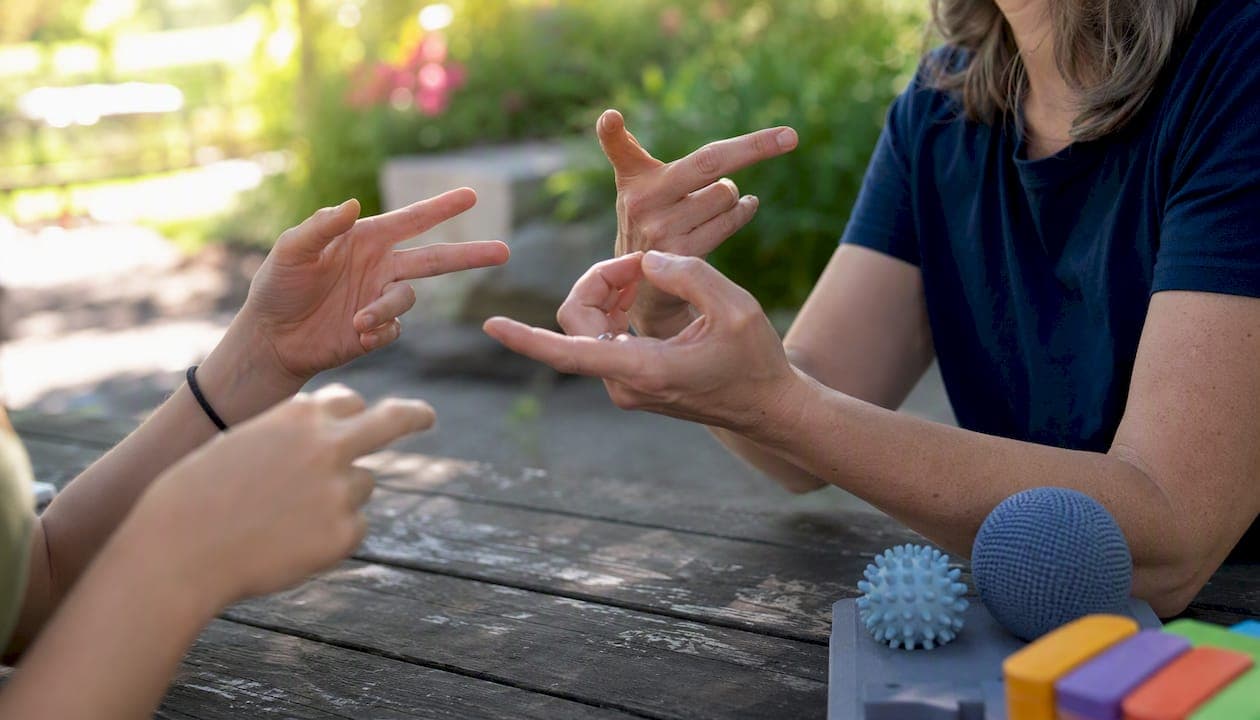
The double empathy problem, a term coined by autistic researcher Damian Milton in 2012, describes social communication breakdowns between autistic and non-autistic people as a two-way mismatch, not a one-sided flaw located in the autistic person. Both sides are misreading each other. Neither side is doing it on purpose, and neither side has the full picture.
That reframing matters because most conversations about autism and social difficulty still default to a deficit model, the idea that autistic people simply lack empathy or social skill. The double empathy problem, backed by research summarized by the British Psychological Society and outlined by the National Autistic Society, says something different: when two people have very different ways of experiencing and signaling social meaning, communication gets harder for both of them. Tools like Omniprism exist partly because of this shift, helping people map their own communication patterns instead of measuring themselves against a single "normal" standard.
Damian Milton's original framing treats communication difficulty as something that happens between two neurotypes, not a fault sitting inside one person. Misreading is mutual, even when only one side gets blamed for it.
Key Takeaways
The double empathy problem shows that communication breakdowns between autistic and non-autistic people run in both directions, and closing that gap requires shared adjustment, not one-sided correction.
| Point | Details |
|---|---|
| Definition and origin | Damian Milton coined the term in 2012 to describe mutual, bidirectional misunderstanding between different neurotypes. |
| Evidence direction | Studies from Crompton, Chen, and others show autistic-to-autistic interactions can be more reciprocal than mixed pairings. |
| Practice shift | Effective strategies target the interaction itself (context-sharing, sensory adjustments) rather than pressuring one person to change. |
| Try one thing | Ask a communication preference question directly instead of guessing at someone's intent. |
| Reflect privately | Use a structured, non-diagnostic self-assessment if the patterns described here feel personally familiar. |
Table of Contents
- What Is the Double Empathy Problem, Exactly?
- Who Coined the Double Empathy Problem, and Where Did It Come From?
- What Does the Research Actually Show?
- How Does the Double Empathy Problem Show Up in Daily Life?
- How Can You Reduce Double Empathy Friction in Real Conversations?
- Is Autism an Empathy Deficit, or Something Else Entirely?
- What Don't We Know Yet About the Double Empathy Problem?
- Could You Be Experiencing Double Empathy Friction Yourself?
- What Framework Grounds This Perspective?
- Where Can You Read More About Double Empathy?
- Frequently Asked Questions
- Sources
What Is the Double Empathy Problem, Exactly?
The double empathy problem rests on a fairly simple mechanical idea: empathy requires two people to send and receive signals in ways the other person can decode. When those signals run on different operating systems, both people misfire, not just one.
Milton described this as a "disjuncture in reciprocity." Reciprocity here means the back-and-forth calibration that happens in any conversation: you say something, you read the other person's reaction, you adjust. Autistic and non-autistic people often calibrate using different cues, different pacing, and different assumptions about eye contact, tone, and turn-taking. The result isn't a broken conversation on one end. It's two working systems that don't sync.
Milton borrowed heavily from phenomenology, the branch of philosophy concerned with how individuals subjectively experience the world, and from sociology's interest in shared meaning-making. He argued that every person occupies a distinct "lifeworld," a term describing the totality of one's lived, felt experience of reality. Two people with very different lifeworlds (sensory processing differences, different social instincts, different reference points) will naturally struggle to model each other's inner state accurately. Neither lifeworld is more valid. They're just further apart.
A few concepts do the heavy lifting in this theory:
- Reciprocity: the mutual, ongoing adjustment two people make to keep a conversation coherent for both of them.
- Meta-perception: how you believe others perceive you, which shapes how much you edit yourself in real time.
- Masking: suppressing or performing social behaviors to appear more neurotypical, often at real psychological cost.
- Participatory sense-making: an approach where two people actively build shared understanding together rather than one person adjusting to match the other's norm.
Picture a simple diagram: two circles, one labeled "autistic lifeworld" and one labeled "non-autistic lifeworld," with an overlapping middle zone representing shared understanding. The size of that middle zone shrinks as sensory differences, communication style gaps, and unspoken social rules pile up on either side. Most everyday interventions try to shrink the non-autistic circle to fit the autistic one, or vice versa. Milton's framing asks a different question: what would it take to grow the overlap instead?
Who Coined the Double Empathy Problem, and Where Did It Come From?
Damian Milton coined the term in 2012 while working as both an academic and an autistic researcher, a dual position that shaped the theory's core insight: he was studying the same interactions he was living through. That lived-experience angle is part of why the framing spread quickly through autistic advocacy communities well before it became a fixture in academic autism research.
The theoretical roots go back further than 2012. Milton drew on phenomenology's attention to subjective experience and on sociological critiques of "theory of mind" research, the long-standing psychological framework suggesting autistic people have a specific deficit in inferring others' mental states. Milton and later collaborators argued that theory of mind studies mostly tested whether autistic people could predict non-autistic behavior, never the reverse. That's a one-directional test dressed up as proof of a one-directional deficit.
The idea moved through several distinct phases:
- 2012: Milton publishes the original framing, drawing on personal and community observation as much as formal data.
- Mid-2010s: Qualitative accounts and first-person narratives from autistic writers and bloggers pick up the concept as a better fit for lived experience than deficit-based language.
- Late 2010s: Researchers including Elizabeth Sheppard, Noah Sasson, and later Catherine Crompton begin designing experiments that test the framing directly, rather than assuming a one-sided deficit.
- 2020s: Organizations like the British Psychological Society and training bodies begin incorporating double empathy principles into clinical and educational guidance, and Milton co-authors a decade-later review of the field.
"The double empathy problem is not something confined to autism," Milton and colleagues note in their retrospective review, arguing the phenomenon can occur between any two people whose dispositions differ widely, though the social consequences land disproportionately on autistic people because non-autistic norms dominate most shared spaces.
That 2022 review, The 'double empathy problem': Ten years on, remains the most cited synthesis of where the theory stands and calls explicitly for research done with autistic people as partners, not just subjects.
What Does the Research Actually Show?
The strongest empirical support for double empathy comes from studies comparing autistic-to-autistic interactions against mixed autistic and non-autistic pairings. The pattern that keeps showing up: autistic people often communicate more efficiently and build more reciprocal rapport with other autistic people than the deficit model would predict, which undercuts the idea that autistic communication is simply "worse" across the board.
| Study | Method | Main Finding |
|---|---|---|
| Sheppard et al. | Experimental first-impression and rapport tasks | Non-autistic participants formed less favorable first impressions of autistic participants, even in brief interactions with no verbal content |
| Sasson (and colleagues) | Rapid social judgment tasks | Negative snap judgments about autistic people occurred within seconds, often based on nonverbal cues alone |
| Crompton et al. | Diffusion chain and information-passing experiments | Autistic-to-autistic chains transmitted information as effectively as non-autistic chains, challenging assumptions of a fixed autistic communication deficit |
| Chen et al. | Naturalistic peer interaction observation | Autistic peer interactions showed distinct but functional reciprocal patterns not captured by measures designed around non-autistic norms |
| Heasman & Gillespie | Workplace interaction analysis | Mutual misunderstanding in the workplace flowed in both directions, with non-autistic colleagues frequently misreading autistic intent as much as the reverse |
These findings, drawn together in reviews like Autism and the double empathy problem, converge on a pattern researchers now treat as reasonably consistent across mixed-method studies: mismatch, not deficit, better predicts where interactions break down. Some lab and behavioral work adds the other half of the picture. Non-autistic participants in controlled studies have formed measurably harsher first impressions of autistic people and struggled to correctly read autistic emotional expressions, evidence that the misreading runs both ways rather than sitting entirely on one side of the interaction.
None of this evidence is airtight yet. Most studies involve small samples, and a fair number rely on structured lab tasks rather than messy, real-world interactions like a job interview or a first date. The theory has strong qualitative and experimental support, but researchers themselves caution against treating it as a fully settled, universally proven mechanism. It's a well-supported model still being stress-tested, not a closed case.
How Does the Double Empathy Problem Show Up in Daily Life?
Theory is one thing. Recognizing the pattern in your own week is another.
In a classroom, a teacher interprets a student's lack of eye contact during a one-on-one talk as disinterest or defiance. The student is actually listening intently. For many autistic people, looking away helps them process spoken language rather than split attention between two demanding tasks. The teacher's read isn't malicious. It's just calibrated to a norm that doesn't apply here, and the mismatch quietly damages the relationship over months.
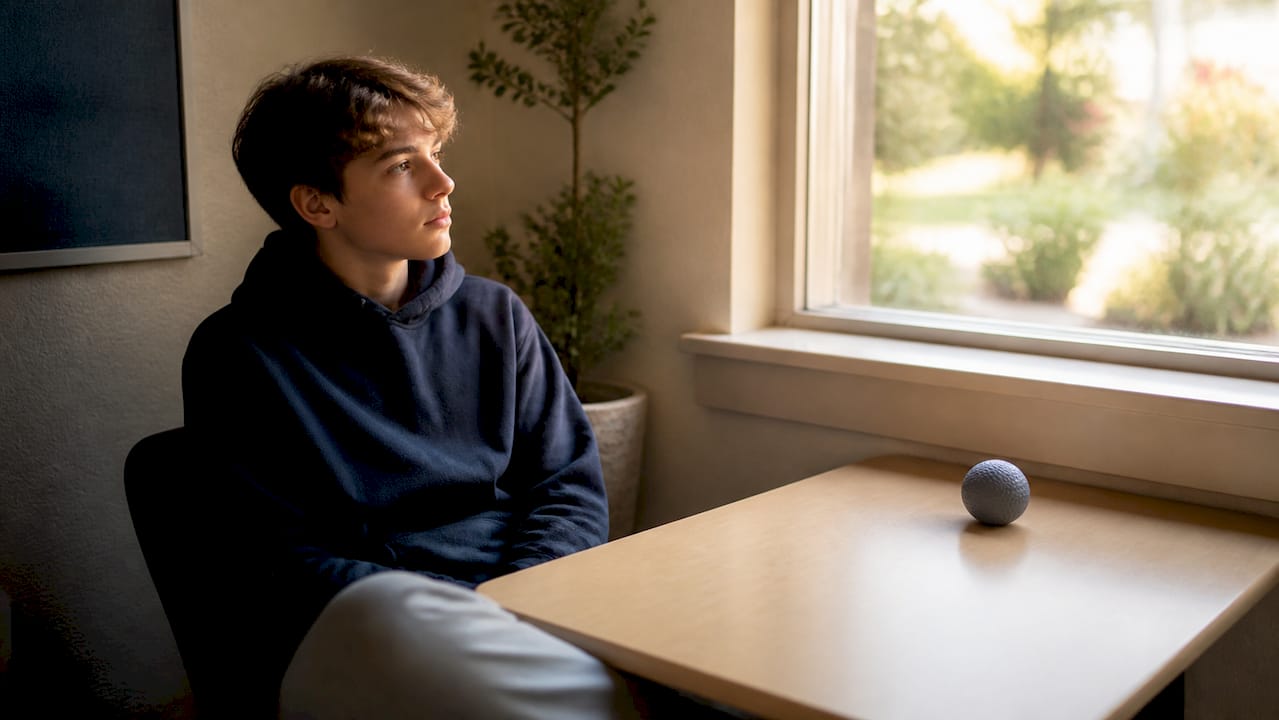
In a workplace, a manager gives a project instruction verbally, in passing, with no written follow-up. An autistic employee asks several clarifying questions afterward, trying to nail down exact expectations. The manager reads the questions as a lack of confidence or an inability to "just get it." The employee reads the vague instruction as a setup for failure. Both are frustrated. Neither one is wrong about their own experience. Research from Brett Heasman and Alex Gillespie on workplace interactions found this exact dynamic recurring: misunderstanding flowing in both directions, rarely traced back to its actual source.
In a medical appointment, a doctor asks a general, open-ended question ("How have you been feeling lately?") expecting a narrative answer. An autistic patient, taking the question literally, gives a brief, factual response that omits context the doctor assumes would be volunteered. The doctor concludes the patient isn't forthcoming. The patient concludes the doctor didn't ask the right question. Multiply this across a full symptom history and diagnostic accuracy suffers for reasons that have nothing to do with the patient's actual health.
The pattern repeats across other high-stakes settings too: criminal justice interviews where flat affect gets misread as guilt or dishonesty, dating contexts where directness gets mistaken for rudeness, and mental health services where masking behavior hides genuine distress from the very professionals trying to help.
The consequences aren't abstract. Chronic misunderstanding, especially when it lands consistently on one side, correlates with isolation, increased masking, and elevated mental health risk among autistic people, a link the British Psychological Society's review treats as a developmental concern, not a footnote.
How Can You Reduce Double Empathy Friction in Real Conversations?
Fixing this isn't about training autistic people to mimic non-autistic norms more convincingly. That approach just shifts the burden onto one person and increases masking, which research links to exhaustion and worse mental health outcomes over time. Participatory sense-making, the collaborative alternative, asks both people to build shared understanding together instead.
A few concrete moves make a real difference:
- Ask directly about communication preferences instead of guessing ("Do you prefer I text logistics or call?").
- State context explicitly rather than assuming it's implied ("I'm asking this because I need it for the report, not because I doubt you").
- Reduce sensory load where you can control it. Dim lighting, less background noise, and shorter meetings often improve two-way clarity more than any script.
- Build rapport around shared interests rather than small talk. Interest-led connection tends to feel more natural and less performative for many autistic people.
- When something feels off in a conversation, check your assumption before correcting the other person's style. Ask what they meant instead of deciding what they meant.
Try opening with something like: "I want to make sure I understand you right, can you tell me more about what you meant by that?" It's a small phrase, but it shifts the interaction from correction to collaboration.
Pro Tip: Resist the urge to frame every awkward moment as something the autistic person needs to fix. Ask yourself first: am I reading this through my own social norms, or theirs? That one question does more to close the gap than any script.
Is Autism an Empathy Deficit, or Something Else Entirely?
The double empathy problem directly challenges the older "theory of mind" account, which framed autistic people as having a specific cognitive deficit in inferring other people's mental states. That framing tested something narrower than it claimed: whether autistic people could predict non-autistic behavior, never whether non-autistic people could predict autistic behavior. A one-directional test can't prove a one-directional deficit.
| Common Misconception | What the Research Actually Supports |
|---|---|
| Autistic people lack empathy | Autistic people often experience empathy intensely; the difficulty lies in signaling and decoding it across different communication styles |
| Communication problems are located entirely in the autistic person | Misreading runs both directions; non-autistic people frequently misjudge autistic intent and emotional expression |
| Autistic-to-autistic interactions are automatically harder | Several studies show autistic-to-autistic interactions can be more reciprocal and efficient than mixed interactions |
| Fixing the problem means changing the autistic person's behavior | Interventions focused on the interactional interface, not one person's behavior, better match the evidence |
| All autistic people communicate and connect the same way | Autism is highly heterogeneous; not every autistic-to-autistic pairing is automatically frictionless |
Treating communication gaps as a deficit rather than a difference carries a real cost. It tells autistic people the burden of adjustment is entirely theirs, which pushes many toward chronic masking. Advocates and researchers increasingly argue that non-autistic people carry equal responsibility to learn and adapt, a point echoed in accessible explainers like Verywell Mind's coverage of the concept.
One caution worth stating plainly: autism is a spectrum with wide variation, and the double empathy framing doesn't promise effortless connection between any two autistic people. Sensory profiles, communication styles, and social preferences differ within the autistic community too. The theory predicts reduced mismatch in many autistic-to-autistic pairings, not a guarantee of frictionless rapport in every one.
What Don't We Know Yet About the Double Empathy Problem?
The evidence base, while growing, still has real gaps. Most existing studies rely on small samples and controlled lab tasks, both of which limit how confidently the findings generalize to messy, high-stakes, real-world interactions like a courtroom or a first job interview.
Researchers point to several priorities for strengthening the field going forward:
- Larger, more diverse samples that reflect the actual heterogeneity of the autistic population.
- Longitudinal studies tracking how double empathy dynamics shift across development, not just single-session snapshots.
- More attention to intersectionality, how race, gender, and class shape whose communication style gets treated as the "default" norm.
- Naturalistic studies conducted in real settings (classrooms, workplaces, clinics) rather than lab tasks designed for experimental control.
- Multi-site replication to confirm findings like Crompton's diffusion chain results hold up across different populations and cultures.
Milton's own 2022 review is explicit on this point: future work needs to be co-produced with autistic people as research partners, not just study subjects, both as an ethical commitment and because it produces more relevant, usable findings.
That's not a small caveat. A theory built partly on lived experience loses credibility fast if the next decade of research on it excludes the people it describes.
Could You Be Experiencing Double Empathy Friction Yourself?
A short, honest reflection can surface patterns you might not have named yet. None of this is diagnostic. It's just a starting point for noticing where the gap tends to open up.
Answer yes or no, quickly and honestly:
- Do certain environments (loud rooms, bright lighting) consistently make conversations harder for you or someone close to you?
- Do you or someone you know often need extra time to respond, and does that get misread as disinterest?
- Do literal answers to open-ended questions ever get mistaken for evasiveness?
- Does eye contact (too much or too little) ever get read as a signal it wasn't meant to send?
- Do first impressions in new social settings feel consistently harder to shake, even when they're wrong?
- Do interest-based conversations feel dramatically easier than small talk?
- Does directness get labeled as rudeness more often than seems fair?
- Do you notice yourself (or someone else) performing a "socially acceptable" version of themselves that feels exhausting to maintain?
- Do written instructions land better than verbal ones, or vice versa, in a way that causes friction with others?
- Do misunderstandings in a relationship tend to repeat in the same pattern, rather than being one-off events?
Pro Tip: If you're raising these questions with a partner, friend, or coworker, frame them as curiosity, not diagnosis: "I've noticed we read this differently, can we figure out why?" lands very differently than "This is a you problem."
None of this replaces a clinical evaluation, and it isn't meant to label anyone. If the pattern feels familiar and you want a structured, private starting point, Omniprism's self-assessment offers a plain-language profile across 14 domains, including autism traits and masking, without requiring a formal diagnosis first.
What Framework Grounds This Perspective?
Most explainers on this topic stop at "autism isn't an empathy deficit" and call it done. That's true, but it undersells the harder, more useful claim buried underneath it: the responsibility for repairing miscommunication has been assigned to the wrong party for decades, and that assignment has shaped policy, clinical practice, and workplace accommodation in ways still being unwound.
The evidence reviewed here, particularly Heasman and Gillespie's workplace findings and Crompton's diffusion chain results, points toward something practitioners underestimate: fixing the interaction, not the individual, produces better outcomes than any social skills curriculum aimed solely at autistic people. That's a genuinely uncomfortable idea for institutions built around compliance and correction. It asks employers, teachers, and clinicians to change first, which is a much harder sell than asking one person in the room to adapt.
The methodology gaps matter too, and they're worth taking seriously rather than glossing over. A theory this influential, and this personal for the community it describes, deserves the kind of co-produced, larger-scale research Milton's own 2022 review calls for. Omniprism's methodology reflects a similar instinct: describe patterns in plain language, skip the pathologizing framing, and let people draw their own conclusions about what fits their experience.
Where Can You Read More About Double Empathy?
These sources combine peer-reviewed research, lived-experience writing, and accessible explainers, selected for relevance to autism specifically and for a mix of academic rigor and community perspective.
- The double empathy problem (National Autistic Society): the clearest short summary of Milton's original framing, written for a general audience.
- The 'double empathy problem': Ten years on: the essential retrospective review, covering multidisciplinary evidence and calling for co-produced research.
- Autism and the double empathy problem: a detailed survey of empirical studies, including the diffusion chain and peer interaction research referenced throughout this piece.
- Autism and the double empathy problem: Implications for development and mental health: the strongest source connecting misperception to real developmental and mental health consequences.
- The Double Empathy Problem (Verywell Mind): a well-written, accessible entry point for readers new to the concept.
Frequently Asked Questions
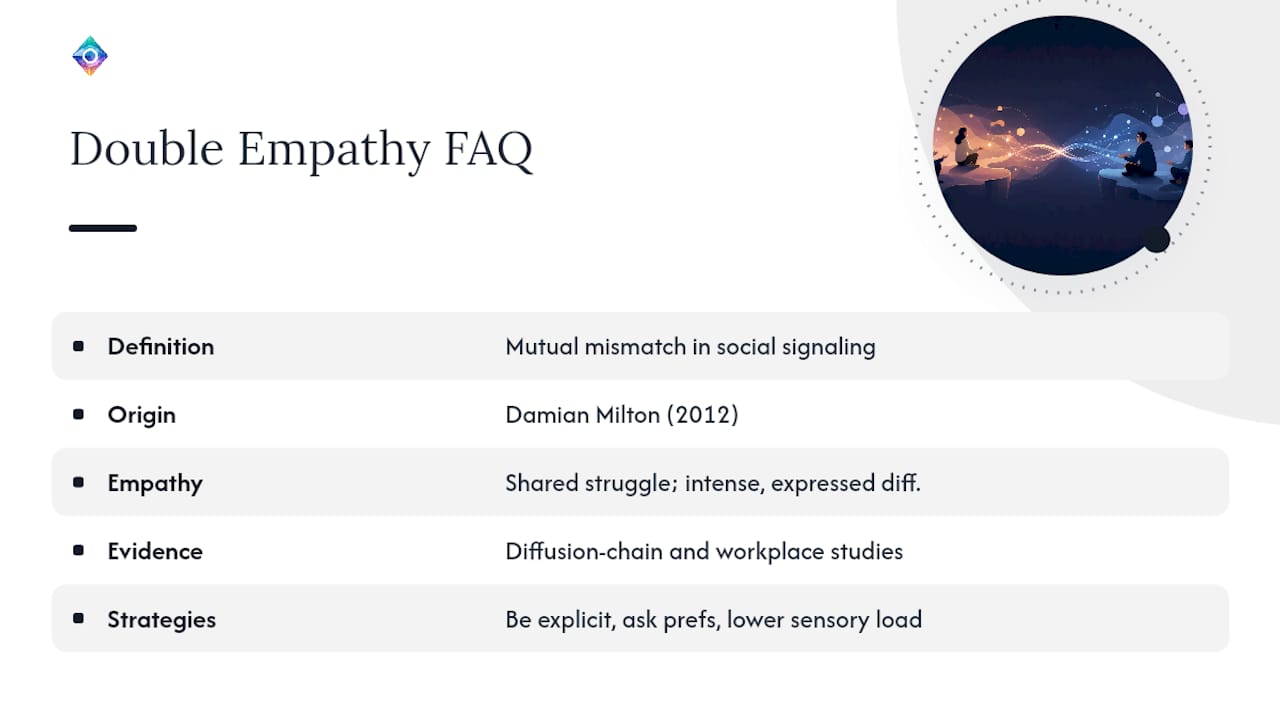
What is the double empathy problem in simple terms? It's the idea that communication difficulties between autistic and non-autistic people come from a mutual mismatch in how each side sends and reads social signals, not from a deficit sitting only in the autistic person.
Who came up with the double empathy theory? Damian Milton, an autistic academic, introduced the concept in 2012, drawing on phenomenology and critiques of theory-of-mind research.
Does the double empathy problem mean autistic people don't struggle with empathy at all? No. It means the struggle is shared. Autistic people often feel empathy intensely but may express it differently, and non-autistic people frequently misread those expressions.
Is there real scientific evidence for the double empathy problem, or is it just a theory? There's a growing body of experimental and observational evidence, including diffusion chain studies and workplace interaction analysis, though sample sizes remain small and more naturalistic research is needed.
How is the double empathy problem different from the theory of mind explanation of autism? Theory of mind research generally tested only whether autistic people could predict non-autistic behavior. Double empathy research tests both directions and finds misreading happens on both sides.
Can understanding the double empathy problem actually improve a relationship or workplace interaction? Yes. Strategies like stating context explicitly, asking about communication preferences, and reducing sensory load target the interaction itself, which the evidence suggests works better than asking one person to change alone.
This article offers general information about the double empathy problem and is not a substitute for professional diagnostic or clinical guidance. If you have concerns about yourself or someone in your care, consult a qualified professional.
Sources
- The double empathy problem
- The ‘double empathy problem’: Ten years on
- Autism and the double empathy problem
- Autism and the double empathy problem: Implications for development and mental health
- The Double Empathy Problem (Verywell Mind)