
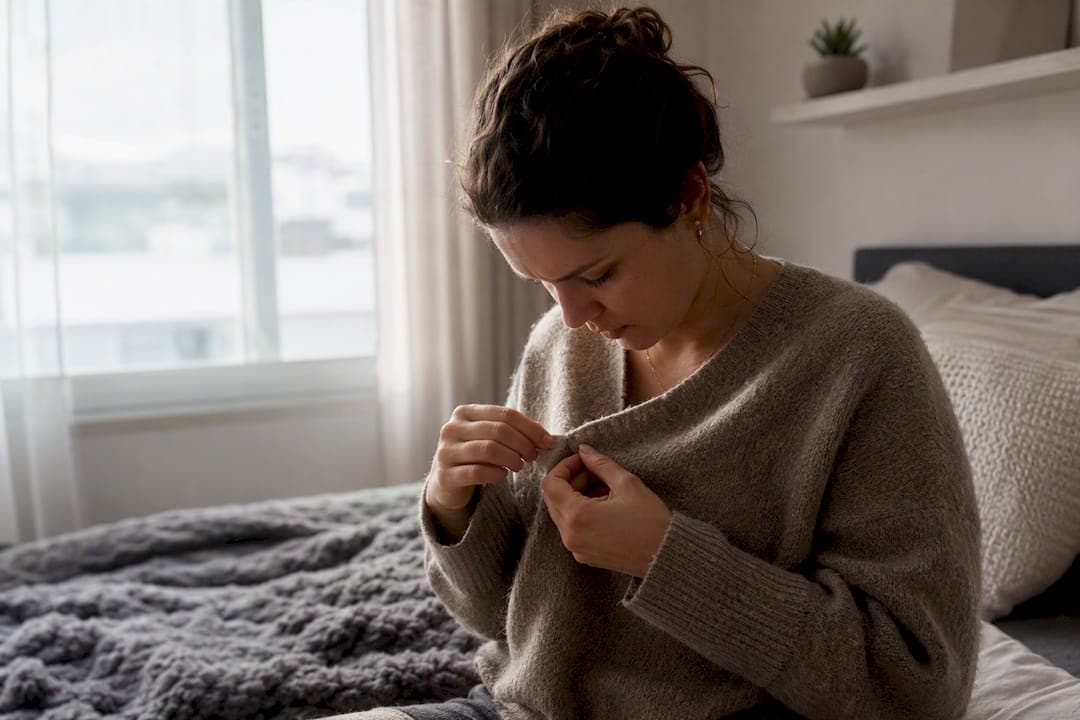
The most common autistic traits in women cluster into five areas: social-pragmatic differences (missing sarcasm or unwritten social rules), sensory sensitivities, executive-function struggles, deeply focused interests, and camouflaging behavior that hides all of the above. If several of these feel familiar across different parts of your life, the next step isn't a diagnosis you self-assign. It's a female-sensitive screening tool like the Autism Spectrum Quotient (AQ) or the GQ-ASC, paired with a clinician conversation if daily functioning is affected.
- Take a female-sensitive screening (AQ or GQ-ASC) rather than a generic checklist.
- Track patterns across home, work, and social settings for at least a few weeks.
- If traits interfere with work, relationships, or mental health, ask a clinician about a formal evaluation, potentially using tools like ADOS-2.
A modified GQ-ASC study on 672 adult women found that a cutoff score of 57 correctly identified 80% of cases, which is a far better hit rate than the tools most doctors were trained on decades ago.
Key Takeaways
Autistic traits in women are frequently masked well enough to delay diagnosis for decades, and female-sensitive tools like the GQ-ASC close much of that detection gap.
| Point | Details |
|---|---|
| Core trait clusters | Watch for social-pragmatic gaps, sensory sensitivities, executive-function struggles, and internalized stimming across settings. |
| Late diagnosis has a cause | The female autistic phenotype and male-normed tools like ADOS-2 and AQ explain much of the delay, not personal failure. |
| Masking has a real cost | Camouflaging eases short-term social friction but is linked to anxiety, burnout, and identity confusion over time. |
| Check for overshadowing | Anxiety, depression, and ADHD diagnoses can mask autism underneath; a developmental history helps separate them. |
| Use a female-sensitive screen | The GQ-ASC identified 80% of cases correctly at a cutoff of 57, far outperforming generic checklists. |
| Try a structured self-assessment | Omniprism's free 14-domain profile and Specialist Briefing report help you organize observations before a clinical visit. |
Table of Contents
- What Are the Most Common Autistic Traits in Women?
- Why Is Autism in Women Often Diagnosed Late?
- How Does Masking Hide Autistic Traits in Women?
- Can Anxiety or ADHD Mask Autism in Women?
- What Screening Tools Detect Autism in Women?
- An Editorial Perspective on Living With Undiagnosed Traits
- How Omniprism Supports Your Next Step
- Frequently Asked Questions About Autistic Traits in Women
- Sources
What Are the Most Common Autistic Traits in Women?
Autistic traits in women rarely show up as the stereotypical "obvious" presentation most people picture. They show up as patterns you might have written off as personality quirks, anxiety, or being "too sensitive."
Social-pragmatic differences often mean you can hold a conversation just fine but miss the subtext. Sarcasm lands late. A joke gets explained to you after everyone else already laughed. Small talk feels like reciting lines from a script you had to memorize.

Sensory sensitivities show up as a visceral reaction to fluorescent lighting, tag seams in clothing, or the hum of an air conditioner that nobody else in the room seems to notice. Some women also experience the opposite: seeking out intense sensory input, like needing loud music or firm pressure to feel regulated.
Executive-function challenges look like chronic lateness despite genuinely trying to be on time, or an inability to start a task until the deadline creates enough urgency to override the freeze. Time blindness is common; so is losing track of multi-step routines that others find automatic.
Intense interests in women often attach to socially acceptable topics, such as animals, a favorite author, true crime, or a fictional universe, pursued with a depth that goes well past casual fandom. Repetitive behaviors, or stimming, frequently get internalized: foot tapping under a desk, hair twirling, or silently repeating phrases in your head rather than out loud.
- Difficulty reading tone or implied meaning in conversation.
- Physical discomfort from lights, sounds, or fabric textures.
- Trouble planning, starting, or switching between tasks.
- A hobby or subject pursued with unusual intensity.
- Small repetitive movements or internal scripts used to self-soothe.
These traits often surface or intensify during adolescence, the transition to university, or early parenthood, when social demands and sensory load both spike at once.
Pro Tip: Don't judge a trait by one bad day. Look for the same pattern showing up in at least two unrelated settings, like at work and at home, over a stretch of months. Isolated incidents happen to everyone; consistency is the signal.
Why Is Autism in Women Often Diagnosed Late?
Researchers describe this as the female autistic phenotype (FAP): not a separate condition, but a different expression of the same core traits, often layered with high social motivation and learned coping strategies that hide the underlying difficulty.
Part of the problem is the tools themselves. Instruments like ADOS-2 and ADI-R were developed and validated largely on male samples, and a narrative review of diagnostic practices found this history reduces their sensitivity to how autism actually presents in many women. The AQ, still one of the most widely used self-report screens, was built on the same skewed foundation.
A modified GQ-ASC study found that even without formal diagnosis, adult women's self-reported traits could be sorted with 80% accuracy once the screening tool was actually calibrated for female presentation.
Consider a woman who spent her twenties diagnosed with generalized anxiety, then depression, before a clinician finally asked about childhood sensory sensitivities and connected the pattern. That sequence is common, not rare.
How Does Masking Hide Autistic Traits in Women?
Masking, also called camouflaging, is the deliberate or automatic suppression of autistic traits to blend into neurotypical social expectations. It's less "putting on a mask" and more building an entire second operating system for social interaction.
- Rehearsing conversations in advance, then running an internal script during them.
- Mimicking peers' facial expressions, slang, or body language.
- Forcing eye contact that feels physically uncomfortable.
- Suppressing stims in public, then releasing them once alone.
Camouflaging can smooth over an interview or a first date, but research on the female autism phenotype links sustained masking to anxiety, depression, burnout, and a corroded sense of identity. Many women describe not knowing who they are underneath the performance.
Pro Tip: Watch for post-event fallout: hours of replaying every sentence you said, sudden exhaustion after a "successful" social event, or a need to cancel the next day's plans just to recover. That crash is often the real cost of masking showing up late.
If masking coexists with self-harm thoughts, severe anxiety, or a noticeable drop in your ability to function day to day, that's a signal to seek clinical support without delay, not something to push through alone — especially if you need guidance on why accommodations level the testing field for LSAT.
Can Anxiety or ADHD Mask Autism in Women?
Yes, and often in both directions. Anxiety, depression, ADHD, eating disorders, PTSD, and OCD show up frequently alongside autistic traits in women, and a clinician who spots one can easily stop looking for the others. This is called diagnostic overshadowing, and comorbidity research on the female autism phenotype shows women receive prior psychiatric diagnoses at notably higher rates than men before autism ever enters the conversation.
- Anxiety and depression treated for years without improvement despite therapy.
- Sensory sensitivities and rigid routines present since early childhood, not just during a mood episode.
- Social difficulties that stay consistent across relationships and settings, rather than tied to one bad job or breakup.
A thorough developmental history, not just a current-symptom checklist, is what usually separates an autism-informed diagnosis from a mood-label placeholder.
What Screening Tools Detect Autism in Women?
Start with a screener designed with female presentation in mind rather than a generic one. The AQ is a reasonable starting point, but pair it with the Camouflaging Autistic Traits Questionnaire (CAT-Q), which specifically measures masking behavior, and the GQ-ASC, built around how autism shows up in girls and women.
That GQ-ASC cutoff of 57 correctly identified 80% of cases among adult women in a sample of 672, a level of accuracy the standard tools rarely reach for this population. A 2025 clinical review recommends combining screeners with a developmental history and direct masking probes rather than relying on any single test.
- Bring notes on childhood behavior, not just current struggles.
- Write down specific examples of masking from work, home, and social life.
- Ask whether the clinician uses ADOS-2, ADI-R, or a female-adapted protocol.
A structured self-assessment can help organize these observations before that appointment ever happens.
An Editorial Perspective on Living With Undiagnosed Traits
If you've spent years performing a version of yourself just to get through a meeting or a birthday party, you already know how much energy that costs. Recognizing autistic traits in yourself isn't about collecting a label. It's about finally having language for something you've been managing alone.
Lean on people who take your experience seriously, whether that's a trusted friend, a peer community, or a clinician who actually knows the female presentation research. Your health and safety come first; a screening tool is a starting point for that conversation, not a verdict.
How Omniprism Supports Your Next Step
Formal evaluation takes time, and a lot of women arrive at their first appointment unsure how to describe years of masking in a fifteen-minute intake slot. Omniprism gives you a structured way to organize that history before you ever sit down with a clinician.
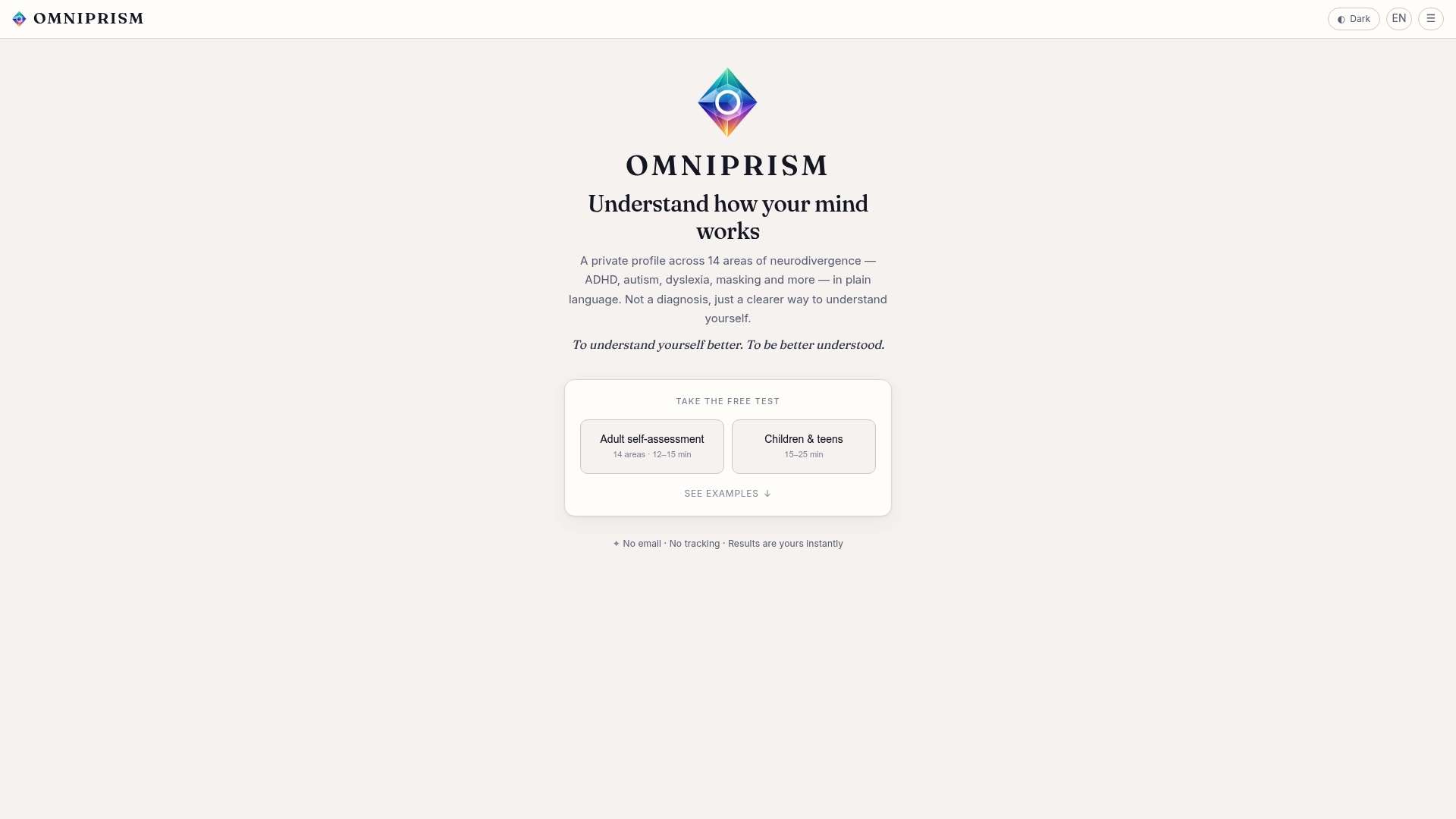
The free self-assessment covers 14 domains, including autism, ADHD, dyslexia, and masking itself, and returns an instant, plain-language profile with no account tracking or data collection required. If you're preparing for a clinical conversation, the optional Specialist Briefing report translates your results into a format built for a doctor or therapist to review quickly, and the methodology page explains exactly how each domain score is constructed. Parents wondering about a daughter's school behavior can also try the guided assessment for children built for younger kids. Start the free assessment today and bring the results, and the Specialist Briefing if you choose one, to your next appointment.
Frequently Asked Questions About Autistic Traits in Women
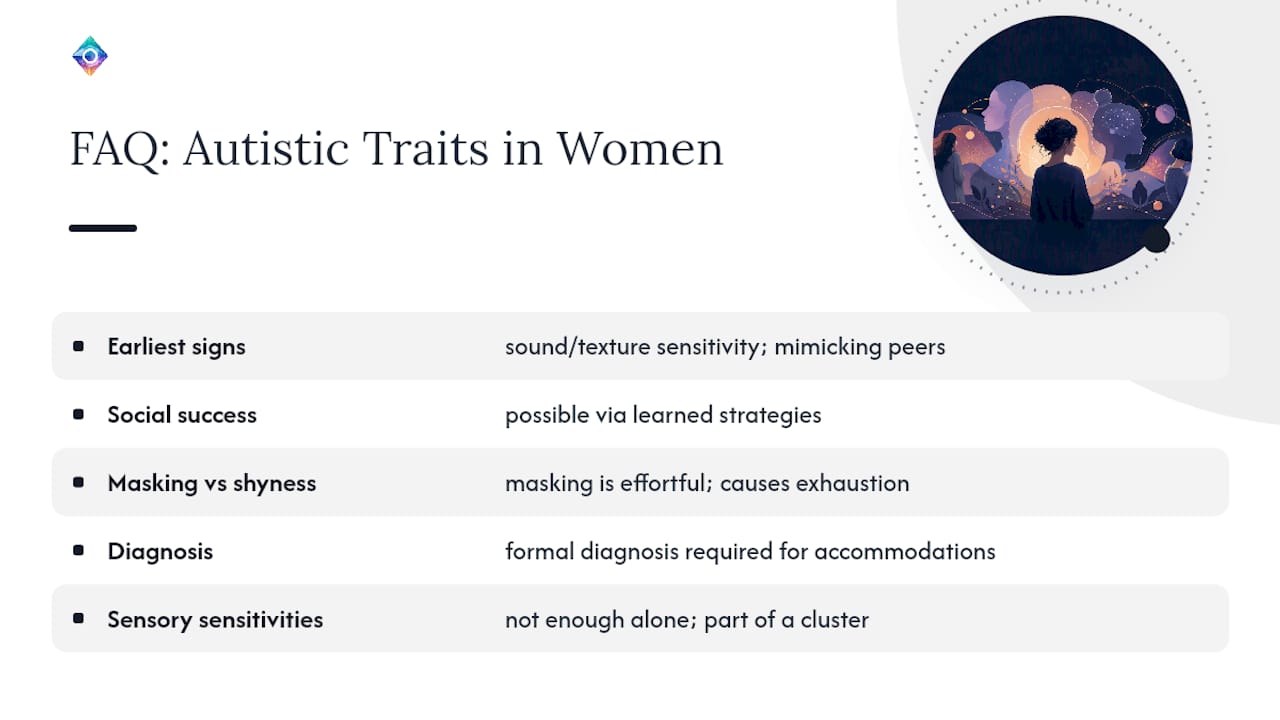
What are the earliest signs of autism in women? Early signs often include intense sensitivity to sound or texture, trouble with peer friendships that seem effortless for others, and a tendency to mimic classmates' behavior to fit in during childhood or adolescence.
Can you be autistic and still be socially successful? Yes. Research on undiagnosed adults with high AQ scores shows many develop strong social functioning and empathy through learned strategies, which is part of why their traits go unnoticed for years.
Is masking the same as being introverted or shy? No. Shyness is a temperament trait; masking is an active, effortful process of monitoring and adjusting behavior to hide autistic traits, and it tends to produce exhaustion afterward that shyness alone doesn't.
Should I get a formal diagnosis or just use a self-assessment? A self-assessment like Omniprism's is a useful first step to organize your observations, but a formal diagnosis from a clinician trained in adult female presentation is the only way to access certain accommodations or targeted support.
Do sensory sensitivities count as an autistic trait on their own? Sensory differences alone aren't enough for a diagnosis, but combined with social-pragmatic differences and executive-function patterns, they form part of the recognized cluster clinicians look for.
This article is general information, not a substitute for advice from a qualified doctor. Consult a qualified healthcare professional about your own circumstances before acting on anything here.
Sources
- Am I Autistic? Utility of the Girls Questionnaire for Autism Spectrum Condition as an Autism Assessment in Adult Women - PMC
- Frontiers | Female gender and autism: underdiagnosis and misdiagnosis – clinical and scientific urgency
- Autistic traits and social functioning patterns in adults (Springer link)
Bring the study citations or a printed screening result to your appointment; clinicians familiar with this research tend to take a documented history more seriously than a verbal description alone.